Summer House of Horrors

The 1944 film, Gaslight stars Ingrid Bergman as Paula, an orphaned young woman thrown into crisis when her aunt, a renowned opera singer, is murdered. While studying to follow in her footsteps, Paula is swept off her feet by Gregory Anton, who ushers her along into a hasty marriage which takes root in the townhouse Paula has inherited; the townhouse where her aunt was murdered. Over the course of the film, Gregory manipulates and intentionally distorts Paula’s perception of events–and others’ perception as well–with the goal of isolating and controlling her. In the end, it’s revealed that Gregory was her aunt’s murderer; his marriage to Paula part of a plan to drive her to madness, forcibly institutionalize her, and steal her inherited wealth.
Gaslight is part of a longer narrative tradition in Gothic romance; the kind of story you'd find with one of those classic vintage pulp covers of women in billowing gowns looking back as they flee a looming estate under cover of darkness. While the Brontës have undoubtedly influenced this aesthetic, Wilkie Collins' The Woman In White is the literary source text, the roots of this gnarled family tree. You know it even if you've never heard of it: a classed-but-vulnerable woman, a fiendish suitor, the threat of the asylum, the spectator-detective. It was even inspired by a true story, the case of Louisa Nottidge.
Wuthering Heights, Jayne Eyre, Agnes Grey, and The Woman In White are all Victorian novels deemed feminist works whose studies of the precarity of women’s sovereignty are explicitly racialized. Even in their critique of the racial-economic-gendered social entanglements in which their characters are enmeshed and imprisoned, it is white women’s safety and sovereignty that is centered. The gothic heroine was the nineteenth century’s answer to the medieval damsel in distress: always essentially a girl lost in the fog of young love, menaced by shapeshifting men and her own mind. A symbol of naive innocence and spiritual purity, she is subject to the schemes and appetites of the men around her–blood relations and otherwise–all looking for a piece of her, by which I mean, her inheritance.
In well over a decade of looking critically at horror films, I’ve found the genre sometimes most potent in places where it doesn’t belong. This is how certain romances can come to be more spine-tingling than much of the comedy we call horror. It’s also how a season of reality tv can invoke the same dread and suspense as Rosemary’s Baby.
Amanda Batula of Bravo’s Summer House would identify with the gothic heroine. As she tells it, she too was driven to madness by a man, ex-husband Kyle Cooke, who lied, cheated, and abandoned her to rot in their Manhattan apartment while he became a touring DJ just to spite her (in reality, he became a touring DJ to pay down the $3 million debt accrued by he and Amanda’s beverage business, Loverboy). The share-house in the Hamptons where Summer House is set—indeed, the architecture of the show itself–is transformed into a proverbial gothic manor from which they can’t escape. And because they hold each other hostage, they hold everyone around them hostage as well, viewers and cast alike.
Amanda was intended to be the heroine of Summer House’s tenth season as well as the first season of her, Kyle, and fellow original cast member Lindsay Hubbard’s currently airing spin-off In The City. In Victorian Gothic, it's the death of the heroine's father that sets the narrative in motion, her grief and naivety clouding her vision at the very moment she comes to inherit his wealth. For Summer House and In The City, that inciting incident is Amanda and Kyle's split. Brands were already lining up with a great many bags prepared to ride the wave of fan support headed Amanda’s way, which we might consider a kind of modern inheritance that follows the death of some public marriages. We're talking many hundreds of thousands of dollars presented on a silver platter, the world as her oyster. Then the announcement came. She was dating her best friend and cast member Ciara Miller’s ex, former cast member West Wilson.
In a 2023 piece for Fangoria on Vanderpump Rules and Scandoval, I theorized that reality television inspires a similar style of spectatorship as horror films. At its most base, it's cannibal theater. Viewers watch to tear the cast apart. Simultaneously, that Real Housewife that triggers you is kind of like Michael Myers: the shape of your own deeply held anxieties. On both sides of the camera, we see consistently how a kind of psychic distortion occurs, where the tension between cast members as real people and fictional characters, where their public and personal self-image and sense of self come deeply into conflict. It’s in that liminal space that the real horrors lie: the shrill fuzzy snow between the simulacra of the show and actual reality.
To this point, it can’t ever be forgotten that these shows are as edited, as narratively constructed as any novel or scripted series. They're arguably akin to erasure poems as they're shaped by choices about what we see distinct from what happened. And yucky though it may feel to say, reality television is often at its most compelling when cameras pick up what isn’t intended to be revealed: monstrous shadows looming on the walls behind smiling faces, the guilty heart beating beneath the floorboards of accusation and defensiveness. That’s what Summer House turned into: a series of hair-raising scenes through which Ciara is subject to mind-melting acts of psychological warfare.
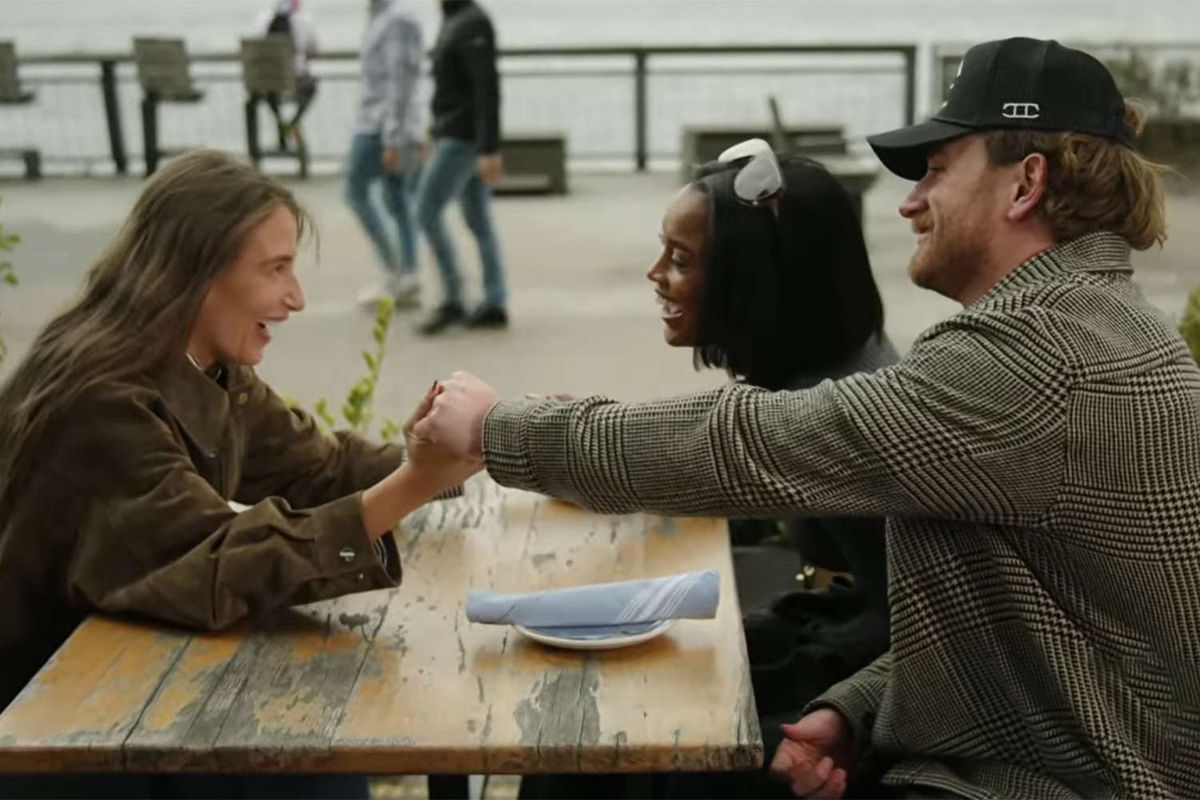
When West first flopped his way on to the eighth season of Summer House, the chemistry between he and fan favorite Ciara was both palpable and seemingly immediate; the blossoming romance between them, a highlight of the season that culminated in West asking her to come home with him to meet his family. By all accounts, their relationship became more serious once the season wrapped and what was sold as a cuter 21st century Guess Who’s Coming to Dinner instead wilted and shriveled into what now resembles something closer to Get Out.
Here’s the abridged version of events. The series shoots during the summer. West and Ciara split in the winter. West proceeded to spend the entirety of the spring on a press tour detailing (to The New York Times) how unserious and not together he and Ciara are. Why does this man think so highly of himself? was a pervasive response. Has he seen Ciara? Has he seen himself? When filming resumed, the cast collectively treated him like a puppy who lost control of his parts and pissed the floor. With his tail between his legs, he slunk around Ciara who paid him in smoldering dust to conceal and contain her heartbreak. It wasn’t until season ten that the pair reconciled and reportedly rekindled their romance, though this wasn’t confirmed when West and Amanda revealed their affair on social media early in the season airing—a change of events that transforms the season into something distinctly other than the narrative originally intends.
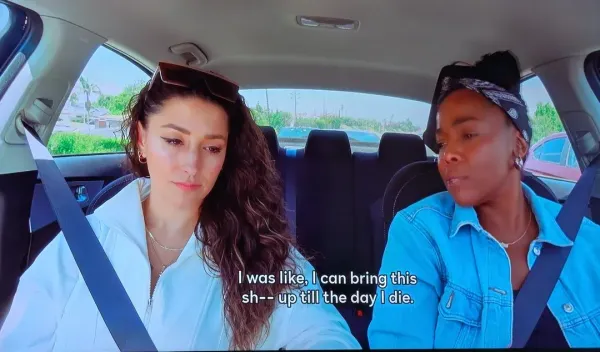
During what is arguably one of the most vulnerable and significant scenes of the entire series, Ciara, alongside newcomers Mia Calabrese and KJ Dillard, share with their white cast members how harrowing it is as Black people to date interracially at all, let alone on a public stage. Ciara addresses her experience with West directly, describes the racialized nature of the blowback she receives and what it means for her to live with the admonishment that she “let a white man play [her] on national TV.” Between the dinner table and her confessionals, Ciara breaks the fourth wall to acknowledge the chasms between how people perceive interracial relationships, what it feels like within them, and the terror of the possibility that it's not what you thought it was.
Longtime viewers will know this has been the subtext of just about every conflict Ciara has ever had in her time on Summer House and its associated spin-offs. She was the first Black cast member on the main franchise and easily its most successful. A model and registered nurse who joined the summer following the Covid lockdowns, we’ve watched her navigate dating white men on predominantly white casts for seven years: long enough for the patterns to become undeniable. This conversation marked a departure because it addressed race as it intersects with dating directly. There was no subtext, insinuation, or suggestion to hide behind. Ciara very clearly said, you did this and this is how it hurt me.
While she addresses the table and West directly, Amanda stands up and sits next to Ciara, rubs her back, attests that the white cast members need “to be with [Ciara, Mia, and KJ] in it…instead of giving people opportunities to tear one another down.” West, who had been worming his way back into her good graces, confesses his ignorance, his misunderstanding of the nuances involved and apologizes. They echo Ciara’s words back to her. “I see you,” Amanda says a few episodes later, looking directly into her friend's eyes while she cries after West disrespects her. “I just want you to know that I see you,” West parrots when he and Ciara reconcile, the scene scored by an ominous cello. The conversation was had, that vulnerability expressed, and they still played footsie fuck eyes while publicly taunting her on Instagram mere months later.
Despite ongoing efforts to infantilize her, it’s not Amanda who’s the story’s gothic heroine. It’s Ciara. Like Paula in Gaslight, like Rosemary in Rosemary’s Baby, we watch her sincerity be weaponized against her not just by the shitty dude, but by her friend. As much as these shows frequently slip into the realm of gothic horror, the nature of that horror is in part due to their function as modern racial pairing texts. "The racial pairing paradigm" as scholar Brigitte Fielder describes, points to “the [narrative] device of interracial friendship” in storytelling, how it “[does] not work primarily to generate white sympathy for Black characters” but instead reveals how “literary models of interracial sympathy tend to universalize and prioritize whiteness and white life experience as normative positions of readerly identification.”
This is the trope of a white main character supported by a Black best friend, a magical or sacrificial Negro, or more recently, a Black woman therapist. But it also invokes the Black femme as oppositional antagonist: the Black Other that creates a white subject's subjecthood. As the reunion and aftermath episodes have since illustrated, trying to get Amanda to understand that she is not Ciara’s victim goes kind of like how I imagine it would if Catherine of Wuthering Heights were a real person and 2-3 million people were trying to tell her Nelly was the real victim. She’d consider the prospect unfathomable. Except this analogy doesn't quite work because Ciara is so not Nelly.
For the entire season, we watch her see through to the bottom of Amanda and speak life into her. She tells her she is worthy and beautiful and deserving of happiness. “I know Ciara gets under your skin really really fast and that’s like her goal,” West tells Amanda in a moment of pure delusion during the second reunion episode, making it grossly clear that they've bonded over feeling falsely victimized by her. It calls back to his confession during the season, that he harbored resentment toward Ciara for public blowback he'd previously received. Though we’ve never seen her be anything else, he acts as though Ciara isn’t a sincere authentic person having sincere authentic feelings and reactions to he and Amanda's betrayal. In his mind, her “goal” is to turn others against them. He hates her for existing as a living thinking feeling mirror of his ugliest aspects.
West's perception and treatment of Ciara exposes his Jekyll and Hyde-esque character. At best, he lies to be liked so he can get what he wants. Ciara challenges Amanda to take control of her life; to leave the terrible marriage and be brave enough to want to change. For this, Amanda resents her with the petulance of a child. West and Amanda expect Ciara to show up for them with unconditional, saintly, parent-like support or shut the fuck up and get out of the way. Her being, her very existence becomes a problem in their perception; a problem they attempt to fix through authorial control of The Narrative (i.e. the show, the story received by the public). The same compulsion is evident on the currently airing and most recent seasons of The Valley, Southern Hospitality, and Southern Charm, each driven by the tensions between the fictions of their casts and actual reality.
Paradoxically, as much as Summer House reveals how pathologically wedded some people are to their misogynoir, it's not true of everyone. Amanda spends the season actively pitting Ciara and Kyle against each other, using Ciara as a shield while she tries to slither her way out of admitting she despises her husband. Speaking speculatively, it seems she expected Kyle to blow up at Ciara as he had done to other friends in the past. But Kyle didn’t take the bait. He directed his anger at Amanda, who West and Ciara rushed to defend. Everyone told him his anger was actually for Ciara and Lindsay and he denied this, knowing they were reacting to a cherry-picked version of events. Even when she came at him with hard truths, Kyle spoke calmly and honestly with Ciara, receiving her advice and intentions without mischaracterizing or vilifying her. He does what Amanda and West appear incapable of doing: he respects his Black friend.
This season of Summer House has been a flashpoint amongst Black women because Ciara ultimately reveals the enclosure, the malevolent hungry house in which we're all trapped: how adherence to respectability politics doesn't save us from pain or humiliation. Ciara was guarded, clearly expressed her traditional values and desire for a family, and was still called a Jezebel, still treated like an “experience," still mischaracterized by people she trusted. She unwittingly and unfortunately becomes a real life case study both in why we’re triggered by characters like Perfidia from One Battle After Another, and the limits of representational anxiety as a mode of spectatorship. Having experienced hypersexualization, we hope that people and characters alike who adhere to purity culture, who embody the opposite of Jezebel, the opposite of Perfidia, will save us from the violence of ungendering and fetishization. But they don't.
The whole scandal speaks to the gothic nature of Black femme life, Black femme reality; how undeniable the ghosts of the past that haunt the present are. The impulse to reduce us to flesh, to “experience” and discard us, as Ciara puts it, is ever present. Amanda’s behavior too suggests something perversely epigenetic in her sense of entitlement; the pleasure she derives from telling herself she's gotten one over on Ciara (she hasn't) and the casual cruelty of her choices, as Kathleen Newman-Bremang has so brilliantly articulated. These are deeply pathological ways of being in relationship that, once experienced, once encountered, you can never un-see or un-know. Ciara told that man, “I’m scared to be nice or be myself around you because I’m scared I’m going to be embarrassed” and he knowingly led her on while entertaining a whole secret girlfriend before doing the single most hurtful thing he could imagine to ensure she’d feel just that. And her supposed best friend let him. Has continued letting him.
In Aesha Harris's recently released revenge thriller, Is God Is, Racine–a Black burn victim of patriarchal violence–confesses to her twin sister, “I wanna step on something for once...It must feel good if everyone else is doing it.” She’s written as an emblem of Black feminine rage but, in the tradition of vengeance films, comes to illustrate the ways revenge doesn't satisfy when expressed through violence unless you've already made peace with losing yourself.
Here's a hard truth to swallow: retribution doesn’t make a loss less lost. The absence of justice certainly deepens a wound, but indulgence in punishment poisons the soul. It is, as it turns out, completely possible to turn away from something we desperately want in favor of something we want more. It's painful, but so is everything.
The measured, focused manner in which Ciara has navigated the revelation and aftermath of this veritable shitstorm was rewarded with the figurative inheritance of brand deals and partnership opportunities that would have been proffered upon Amanda, plus some extras (like starring in Shaboozey's latest music video). But let's be real. She was already hosting the Oscars red carpet before the scandal blew up her show’s ratings and her own personal star power. Like Black Venus, she'll continue to flourish in the wake of this interpersonal nightmare and she'll transmute that success into generational wealth for her family as intended. But it won’t change what happened, that it did happen, that this is what people are capable of. Memory is a haunted house.
The dissatisfaction of the reunion and aftermath episodes are an accurate reflection of the dissatisfaction we've all felt coming away from conversations with people who refuse to acknowledge their own capacity for wrongdoing. How can they see her if they can't see themselves? There’s a reason Amanda and West haven’t watched the season and therefore can’t address anything directly, a simple and obvious one. They’re afraid to see what we see: they’re afraid to see themselves as monsters.